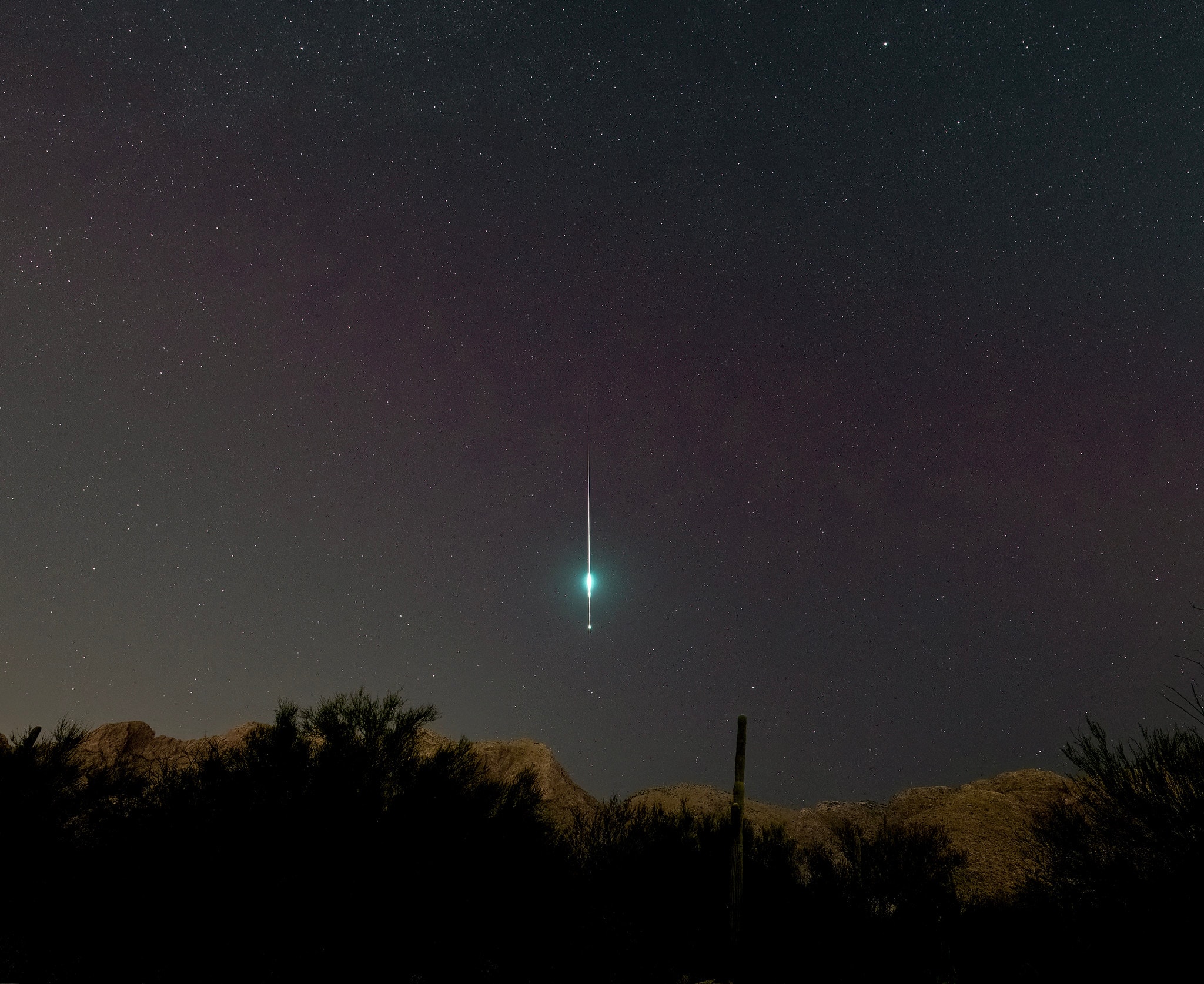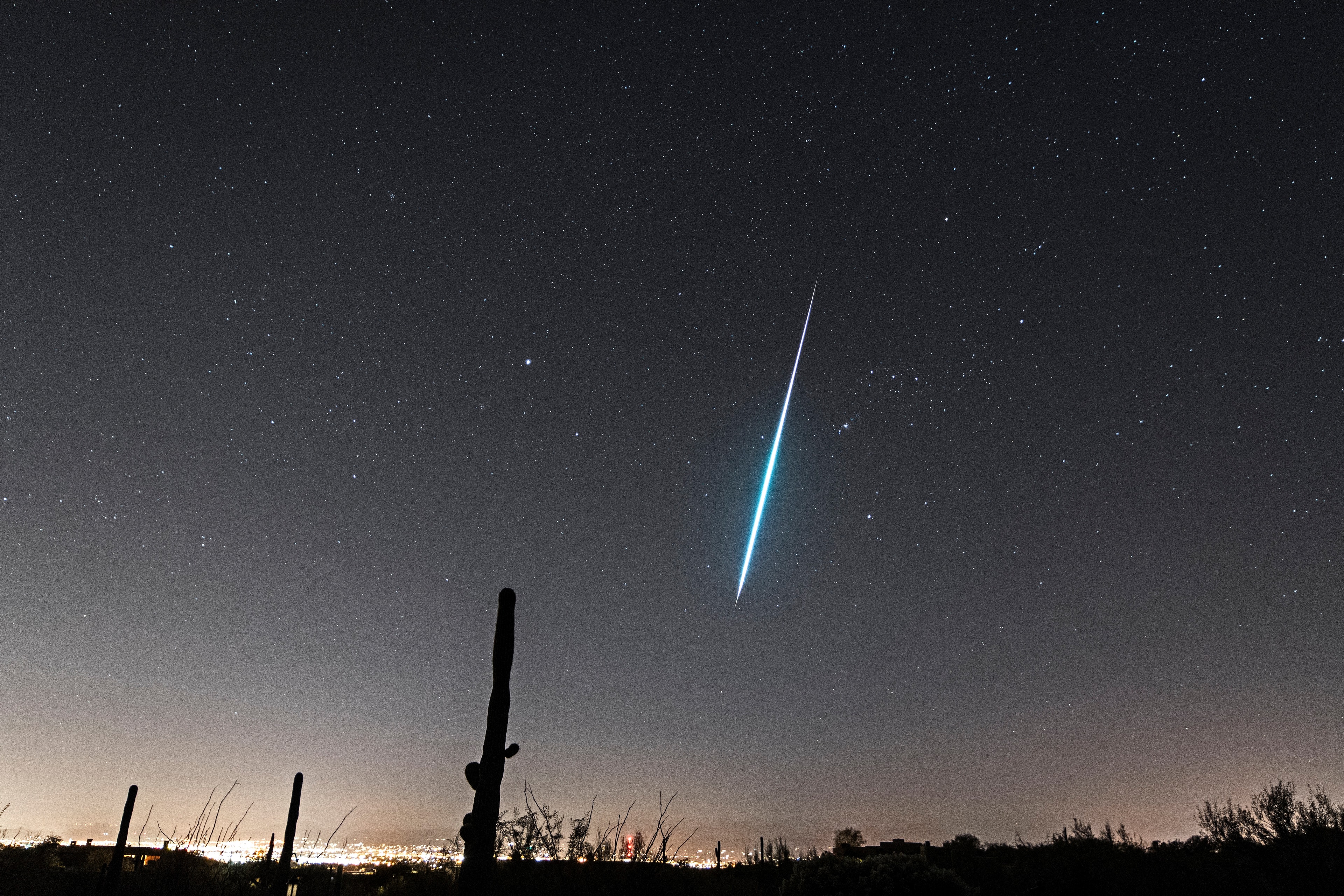
Tucson, Arizona · Dark-sky country
Catch a streak of light that lasts one second.
Meteor photography from the Sonoran Desert.
Photographs by Eliot Herman

On the calendar
The Leonids
- Rate
- About 15 meteors per hour from a dark site
- Sky
- The Moon stays out of the way this year — good news for photographers
Fast, bright, and famous for persistent trains. Best viewing runs midnight until dawn, with the radiant climbing out of Leo in the east.
Plan a Leonids shootThe craft
You don't need a $5,000 rig.
Meteor photography rewards patience far more than expensive gear. Here's the honest, three-part version of everything on the guide page.
- 01
A camera with manual controls
Any entry-level DSLR or mirrorless body works. A fast wide lens helps, but the camera you already own is the right place to start.
- 02
A sturdy tripod
The one true must-have. Exposures run 15 to 30 seconds, so a steady base matters more than any other purchase.
- 03
Patience, and a dark sky
Drive away from city glow, point at the darkest patch of sky, and keep shooting. The meteors do the rest.

Selected captures
One shower at a time
Every major shower gets its own gallery — different radiants, different speeds, different personalities in the sky.

Perseids
August's summer classic

Geminids
December's rich and reliable show

Leonids
Fast streaks from the heart of Leo

Taurids
Slow, stubborn fireballs

Eta Aquariids
Halley's dust, burning at dawn

Orionids
Quiet, steady October nights

Lyrids
April's swift, sparse sparks

Ursids
A quiet shower at the solstice

Minor Showers
The quiet nights between the big shows
Every major shower gets its own gallery — and each one grows with every clear night.
Fireball photographs
Fireballs, caught burning
The brightest meteors — slow, glowing fireballs that light up the landscape — collected in one place, with the exhibitions where large-format prints have hung.
View fireball photographsField notes
From the dark-sky notebook
Shoot reports, gear notes that actually matter, and what went wrong out on the desert floor.
Read the blogYour first meteor photo is one clear night away.
Start with the guide, pick the next shower from the calendar, and point your camera up. I'll walk you through the rest.
Start with the guide