
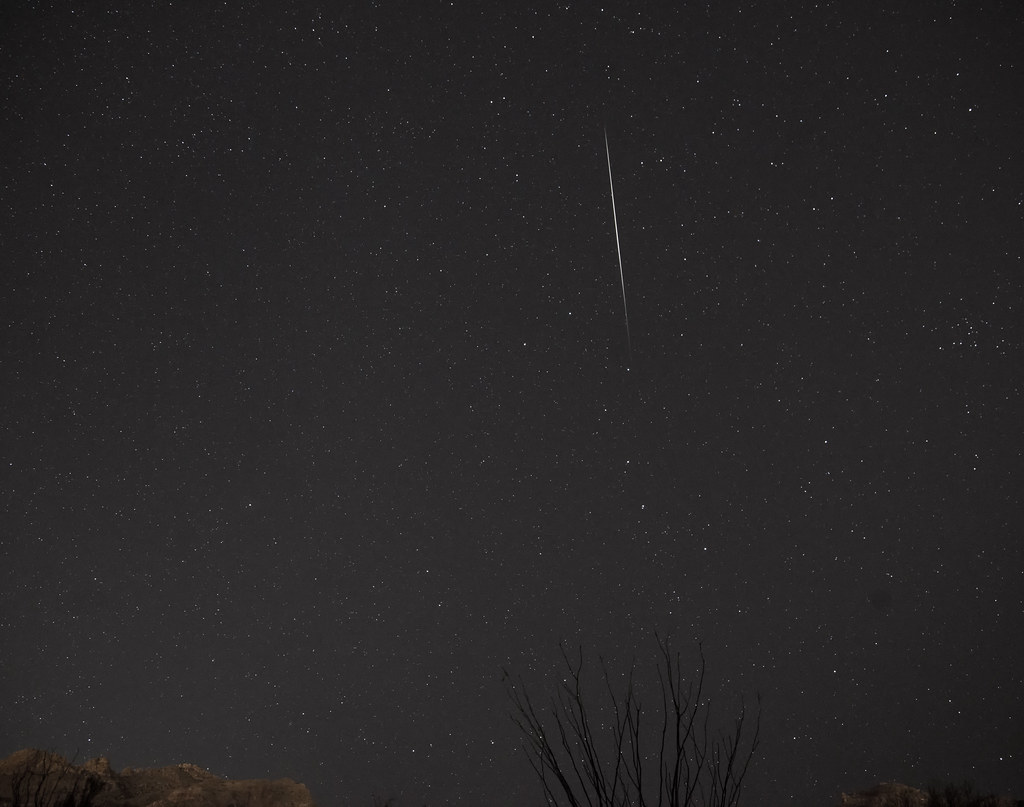
The year's first, and its most fleeting
Quadrantids
About this shower
The Quadrantids are capable of being one of the finest showers of the year, and they are among the most difficult to observe. The activity window is short, but the maximum is the problem: it is extremely narrow, only about six hours wide, so the shower is either fully on or missed entirely. A peak that brief demands being at the right place at the right hour rather than watching night after night, and with no second chance until the following year, a single cloudy night can erase the whole season's observing. The radiant sits in northern Boötes near the handle of the Big Dipper, close to true north, which makes the shower best observed from higher northern latitudes — and it is precisely at those latitudes that the January weather is often not cooperative. Cloudy mid-winter nights defeat even a well-planned peak. The parent body is likely the extinct comet 2003 EH1, now classified as an asteroid, and its dust arrives at a fast 41 km per second. From Arizona the radiant sits low in the northern sky early in the evening and climbs through the morning hours, so a Quadrantid watch here means a cold night with an eye on the northern sky.
Field tip
The maximum lasts only about six hours, so timing beats endurance: check the predicted peak hour for your longitude and be shooting then — the night before or after will not average out in your favor.